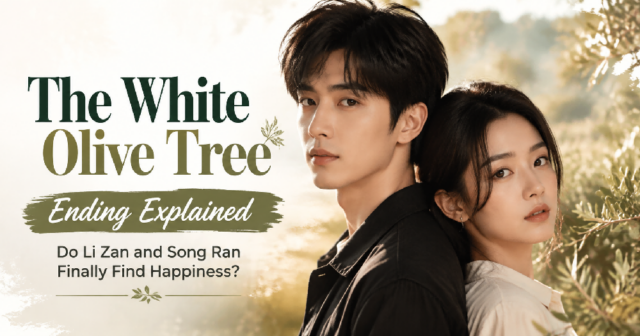
The White Olive Tree is not a typical romance drama built around simple misunderstandings and sweet moments. Instead, the Chinese drama explores love, trauma, sacrifice, and healing through the emotional journey of Li Zan and Song Ran.
After a difficult journey filled with war, separation, guilt, and personal struggles, many viewers are left wondering: Do Li Zan and Song Ran finally find happiness? The ending of The White Olive Tree provides an emotional answer while emphasizing that true happiness is not about forgetting the past, but learning how to live with it.
Table of Contents
The White Olive Tree Ending Explained
The ending of The White Olive Tree focuses less on a dramatic reunion and more on emotional recovery. Throughout the series, Li Zan and Song Ran are separated not because their feelings disappear, but because both characters must face the wounds left by their experiences.
Li Zan carries deep guilt after witnessing the consequences of conflict. Although he appears calm and gentle, he struggles with memories that prevent him from returning to his previous life. His biggest challenge is not finding love, but accepting that he deserves happiness.
Meanwhile, Song Ran also experiences emotional pain. As a journalist who witnessed suffering firsthand, she understands that love alone cannot erase trauma. She must learn how to balance her ideals, career, and personal happiness.
The final episodes show that their relationship survives because they grow individually before coming together again.
Do Li Zan and Song Ran Reunite?
Yes, Li Zan and Song Ran eventually find their way back to each other.
However, their reunion is not presented as a simple romantic reward. The drama avoids the typical ending where all problems disappear after the couple reunites. Instead, it shows two people who have changed because of their experiences.
When Li Zan and Song Ran meet again, they are no longer the same people who first fell in love. They carry memories, regrets, and scars, but they also gain a deeper understanding of life.
Their relationship becomes stronger because they finally learn how to support each other rather than trying to save each other.
How Li Zan Overcomes His Inner Pain
Li Zan is one of the most complex characters in The White Olive Tree. His journey represents many people who struggle with emotional wounds after experiencing extreme situations.
Li Zan’s guilt and self-blame
For much of the story, Li Zan believes he must carry responsibility for the tragedies around him. His kindness becomes a burden because he constantly questions whether he has done enough.
This emotional conflict creates distance between him and Song Ran. He fears that bringing her into his life will only bring pain.
Learning to accept happiness
The ending shows Li Zan slowly understanding that remembering the past does not mean he must remain trapped by it.
The white olive tree becomes a symbol of this transformation. Like the tree growing in difficult conditions, Li Zan learns that healing is possible even after suffering.
Song Ran’s Growth and Final Choice
Song Ran’s character development is equally important to the ending.
At the beginning of the story, she is driven by curiosity, courage, and a desire to show the truth through her work. Her experiences change her understanding of responsibility and love.
Instead of becoming someone who depends completely on Li Zan, Song Ran chooses to continue pursuing her own path while supporting the person she loves.
This makes their relationship more mature. They are not two incomplete people searching for someone to fix them. They are two independent individuals choosing to walk together.
The Meaning Behind the White Olive Tree
The white olive tree is more than a romantic symbol. It represents peace, hope, and the possibility of rebuilding after destruction.
Throughout the drama, the olive tree reflects the emotional journey of the characters:
- For Li Zan: It represents forgiveness and recovery.
- For Song Ran: It represents hope and the courage to continue forward.
- For their relationship: It represents love that survives hardship.
The drama suggests that happiness does not mean living without pain. Instead, happiness comes from finding meaning after experiencing pain.
Final Ending Analysis: Is It a Happy Ending?
Yes, The White Olive Tree delivers a hopeful ending for Li Zan and Song Ran.
However, it is not a traditional fairy-tale ending. The drama does not erase their struggles or pretend that emotional scars disappear overnight.
Instead, the conclusion emphasizes acceptance, healing, and choosing love despite uncertainty.
Li Zan and Song Ran finally find happiness because they learn three important lessons:
- Past pain does not define the future.
- Love requires understanding and patience.
- Healing is a journey that people must complete together.
The final message of The White Olive Tree is that even after experiencing darkness, people can still find a place filled with warmth and hope.
Final Thoughts
The White Olive Tree stands out because its ending is not only about whether two characters end up together. It is about whether they can rebuild themselves after losing parts of who they once were.
Li Zan and Song Ran’s love story proves that true happiness is not the absence of suffering. It is the courage to keep moving forward and create a new beginning.
For viewers who enjoy emotional romance dramas with deeper themes, The White Olive Tree offers a powerful story about love, healing, and second chances.
Explore More About The White Olive Tree
Continue exploring The White Olive Tree with our complete coverage, including reviews, character guides, and ending explanations.
- The White Olive Tree Drama Review: A War Romance About Love, Trauma and Healing
- The White Olive Tree Ending Explained: Do Li Zan and Song Ran Finally Find Happiness?
- The White Olive Tree Full Story Explained: Everything That Happened Between Li Zan and Song Ran
- The White Olive Tree Characters Explained: Li Zan, Song Ran and Their Hidden Pain